What is your weight?
Almost done! Slide to set your current weight.
Why Your Weight Is More Than Just a Number on the Scale
Most of us have a complicated relationship with the weighing scale. Some people check it every single morning. Others avoid it for months at a time. But whether you love it or dread it, your weight is one of the most important data points you can track for your long term health.
The key is understanding what your weight actually means — and what it doesn’t.
Weight Alone Tells You Very Little
Here is something that might surprise you. Two people can weigh exactly the same — say, 80 kg — and have completely opposite health situations.
Person A is 80 kg with 35 percent body fat, very little muscle, and carries most of their weight around their belly. They are at high risk for diabetes and heart disease.
Person B is also 80 kg but has 15 percent body fat, strong muscles, and an active lifestyle. They are in excellent health.
Same number on the scale. Completely different bodies. This is why weight only becomes meaningful when you combine it with other measurements like height, age, and gender — which is exactly what our BMI calculator does.
What Does Your Body Weight Actually Consist Of?
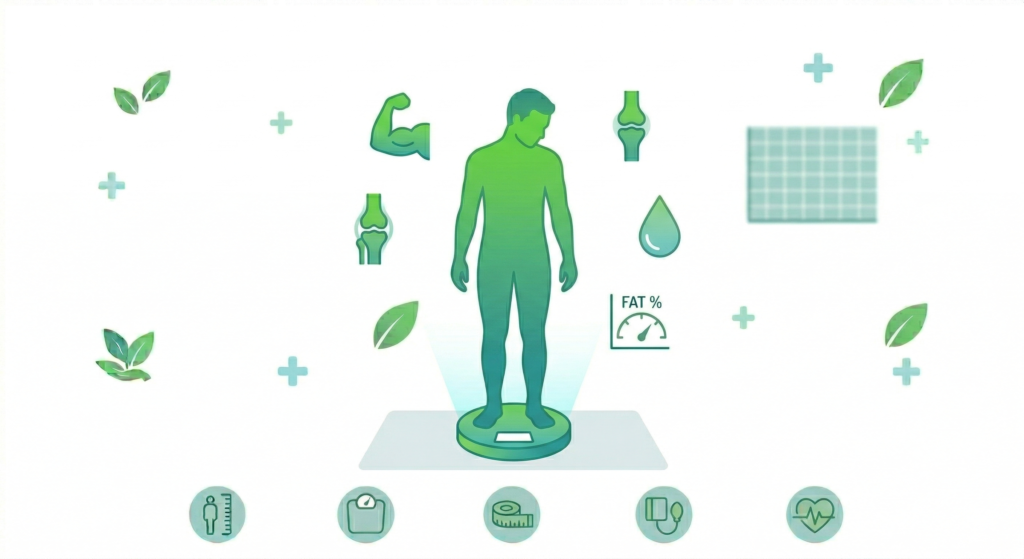
Your total body weight is not just fat. It is made up of several components that all contribute to that number on the scale.
Muscle mass is one of the heaviest components of your body. People who exercise regularly and have more muscle will naturally weigh more — and that is a good thing. Muscle is metabolically active, meaning it burns calories even when you are resting.
Bone density also contributes significantly to your weight. People with denser, stronger bones will weigh more than those with weaker bones of the same size. This is actually a sign of good health.
Water weight makes up roughly 60 percent of your total body weight. This is why your weight can fluctuate by 1 to 3 kg within a single day depending on how much water you have drunk, how much you have sweated, and what you have eaten.
Fat mass is what most people think about when they think about weight. But as you can see, fat is just one piece of a much bigger picture.
Why Weight Fluctuates Every Day
If you weigh yourself every day, you have probably noticed that the number is never exactly the same. This is completely normal and expected — and it has nothing to do with actual fat gain or loss.
Your weight can go up by 1 to 2 kg after a salty meal because sodium causes your body to retain water. It can drop by 1 kg after an intense workout because of sweat loss. It can be higher in the evening than in the morning simply because you have eaten and drunk throughout the day.
This is why health professionals recommend weighing yourself first thing in the morning, after using the bathroom, and before eating or drinking anything. This gives you the most consistent and comparable measurement over time.
How Much Should You Actually Weigh?
This is the question everyone wants answered. And the honest answer is — it depends entirely on your height, age, and gender.
There is no single ideal weight that applies to everyone. A healthy weight for a 5 foot 2 inch woman in her thirties is completely different from a healthy weight for a 6 foot man in his forties.
This is exactly why our calculator gives you a personalised ideal weight range based on your specific measurements — not a generic number copied from a chart that was designed for the average population and may have nothing to do with your body.
The Danger Zones — When Weight Becomes a Health Risk
While moderate weight variations are completely normal, there are two extremes that can seriously harm your health.
Being significantly underweight puts enormous stress on your body. Your immune system weakens, making you more vulnerable to infections. Your bones become fragile and prone to fractures. Your heart can actually shrink in size when the body is starved of nutrition for extended periods. For women, being severely underweight can stop menstrual cycles and affect fertility.
Being significantly overweight creates a different set of problems. Excess fat — especially around the abdomen — releases inflammatory chemicals that damage blood vessels and organs over time. This leads to insulin resistance, which is the precursor to type 2 diabetes. It puts excessive strain on your joints, particularly your knees and hips. It forces your heart to work harder every single day, increasing the risk of heart attack and stroke.
The good news is that even modest weight loss — as little as 5 to 10 percent of your total body weight — has been shown to significantly reduce these health risks. You do not need to reach your perfect ideal weight to start seeing health benefits. Every small step counts.
Healthy Ways to Manage Your Weight
Weight management is not about crash diets or extreme exercise. It is about creating sustainable habits that your body can maintain for years.
Eat more protein — Protein keeps you fuller for longer, preserves muscle mass during weight loss, and actually requires more energy to digest than carbs or fat. Include eggs, lentils, chicken, fish, or paneer in every meal.
Stay hydrated — Drinking enough water throughout the day supports metabolism, reduces false hunger signals, and helps your body flush out waste more efficiently. Aim for at least 2 to 3 litres per day.
Move consistently — You do not need to run marathons. Even 30 minutes of brisk walking every day makes a measurable difference to your weight, your heart health, and your mood over time.
Sleep properly — This one is underrated. Poor sleep increases hunger hormones and reduces the hormones that make you feel full. People who sleep less than 6 hours consistently tend to weigh more than those who get 7 to 8 hours.
Reduce processed food — Packaged snacks, sugary drinks, and fast food are designed to make you eat more than you need. Replacing even one processed meal per day with a home cooked option can make a significant difference over weeks and months.
Your Weight Is a Journey, Not a Destination
The number on the scale is just a snapshot of where you are right now — not a permanent label and certainly not a measure of your worth as a person. Bodies change. Life changes. What matters is that you understand your body, track the right numbers, and make consistent small improvements over time.
Enter your current weight honestly in the calculator. No one is judging you — the only person this information helps is you. Your accurate weight, combined with your age, gender, and height, will give you a result that is genuinely useful and personalised to your body.
That result is just one step away.