What is your gender?
Calorie requirements differ by biological sex.
Why Gender Matters in Your BMI and Health Calculation
When you step on a weighing scale, the number you see is the same regardless of whether you are male or female. But what that number means for your health — that’s a completely different story.
Gender is one of the most important factors in understanding your BMI, your ideal weight, your calorie needs, and your overall health risk. Here’s everything you need to know.
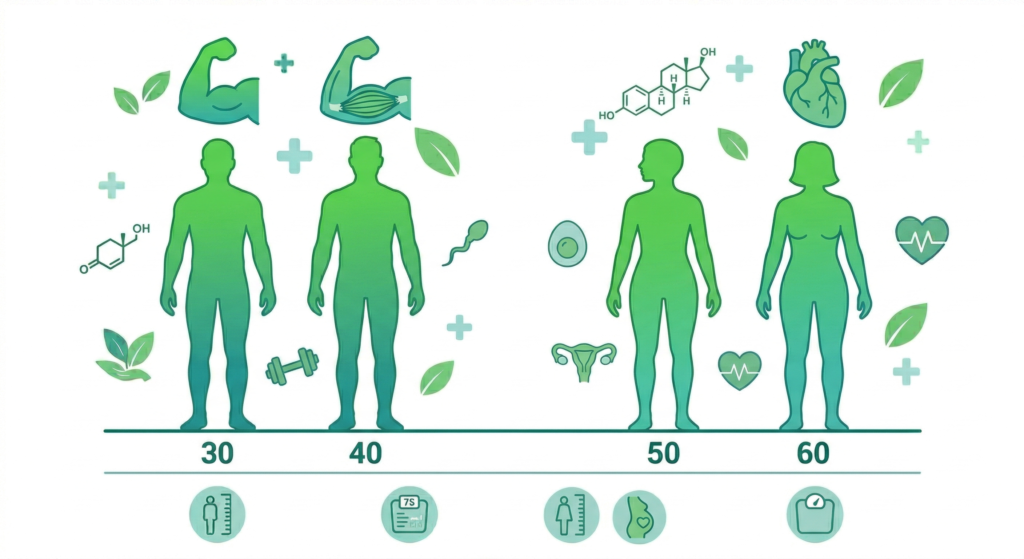
Men and Women Are Built Differently
This isn’t just a social observation — it’s pure biology. Men and women have fundamentally different body compositions, hormonal profiles, and fat distribution patterns. These differences directly affect how BMI should be interpreted for each gender.
On average, men naturally carry more muscle mass than women. Muscle is heavier and denser than fat, which means a man and a woman with the exact same BMI can have very different body compositions. The man might be lean and muscular while the woman might carry more body fat — even though their BMI numbers look identical on paper.
Body Fat Percentage Differences
Here’s something most people find surprising. A healthy body fat percentage is actually different for men and women.
For men, a healthy body fat range is generally between 10 and 20 percent.
For women, a healthy body fat range is between 18 and 28 percent.
Women naturally carry more fat because their bodies are designed for pregnancy and hormonal functions that require a certain amount of fat reserves. This is completely normal and healthy — it doesn’t mean women are less fit than men.
This is also why using the same BMI cutoffs for both genders can sometimes be misleading. A woman with a BMI of 24 might be perfectly healthy while a man with the same BMI but very low muscle mass might actually have too much body fat.
How Hormones Play a Role
Hormones are the real driving force behind the differences in how men and women gain, lose, and store weight.
Testosterone — the primary male hormone — promotes muscle growth and helps the body burn fat more efficiently. This is why men generally find it easier to lose weight than women, at least in the short term.
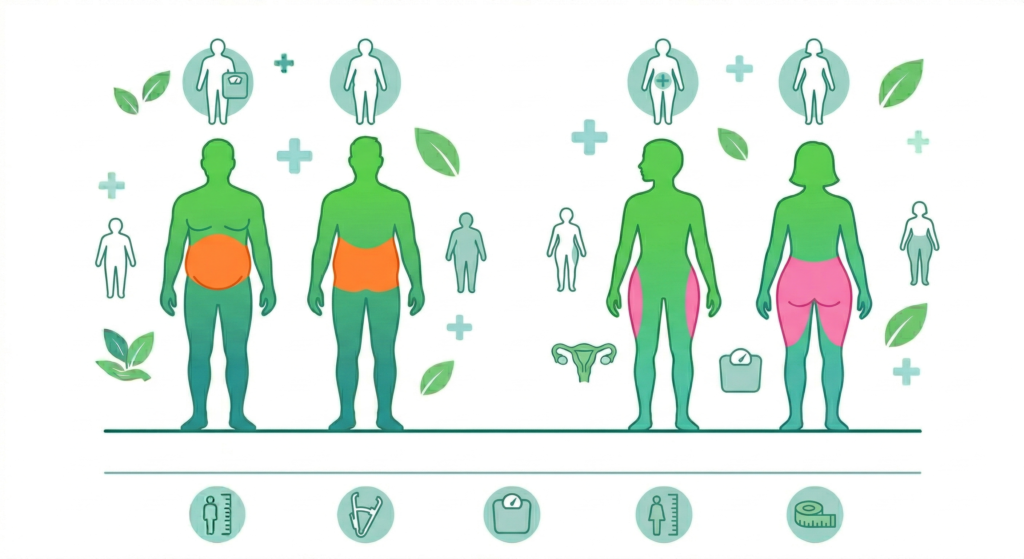
Estrogen — the primary female hormone — encourages fat storage, particularly around the hips, thighs, and buttocks. This is why women tend to have a more pear-shaped body composition compared to men.
After menopause, estrogen levels drop significantly. Fat distribution in women then shifts from the hips and thighs toward the belly — the same pattern seen in men. This belly fat, also known as visceral fat, is the most dangerous type because it surrounds internal organs and increases the risk of heart disease and diabetes.
Calorie Needs Are Different Too
Your gender directly affects how many calories your body needs every day. This is because of differences in muscle mass, body size, and hormonal activity.
On average, men need roughly 500 to 700 more calories per day than women of the same age, height, and activity level. This is why our calculator asks for your gender — it uses this information to give you a personalised daily calorie recommendation that actually fits your body, not a generic number that applies to everyone.
Eating too few calories for your gender and body type can slow your metabolism, cause muscle loss, and actually make weight management harder in the long run.
Health Risks by Gender
Men and women also face different health risks when their BMI falls outside the healthy range.
Men are more likely to carry excess weight around the belly, which is directly linked to higher risks of heart disease, high blood pressure, and type 2 diabetes. Even at a normal BMI, a large waist circumference in men is a significant warning sign.
Women face unique risks related to hormonal changes. Being significantly underweight can disrupt menstrual cycles and affect fertility. Being overweight increases the risk of polycystic ovary syndrome, gestational diabetes during pregnancy, and certain hormone-related cancers.
Why This All Matters for Your Result
When you enter your gender into our BMI calculator, it doesn’t just change a label. It actually affects the calculation of your daily calorie needs, your ideal weight range interpretation, and the health tips you receive at the end.
A personalised result that accounts for your gender is simply more accurate and more useful than a one-size-fits-all number.
Embrace Your Biology
Understanding the role gender plays in your health isn’t about comparison — it’s about working with your body rather than against it. Men and women face different challenges when it comes to weight and fitness, and knowing those differences helps you make smarter choices.
Whether you are male or female, your body has an incredible ability to improve when you give it the right inputs — the right food, the right movement, and the right knowledge.
That knowledge starts right here. Continue with your BMI calculation and get a result that’s truly personalised to you.