How old are you?
Age helps us calculate your accurate BMI and calorie needs.
Why Your Age Matters in BMI Calculation
Most people think BMI is just about height and weight. But here’s something many people don’t realise — your age plays a surprisingly important role in understanding what your BMI result actually means for your health.
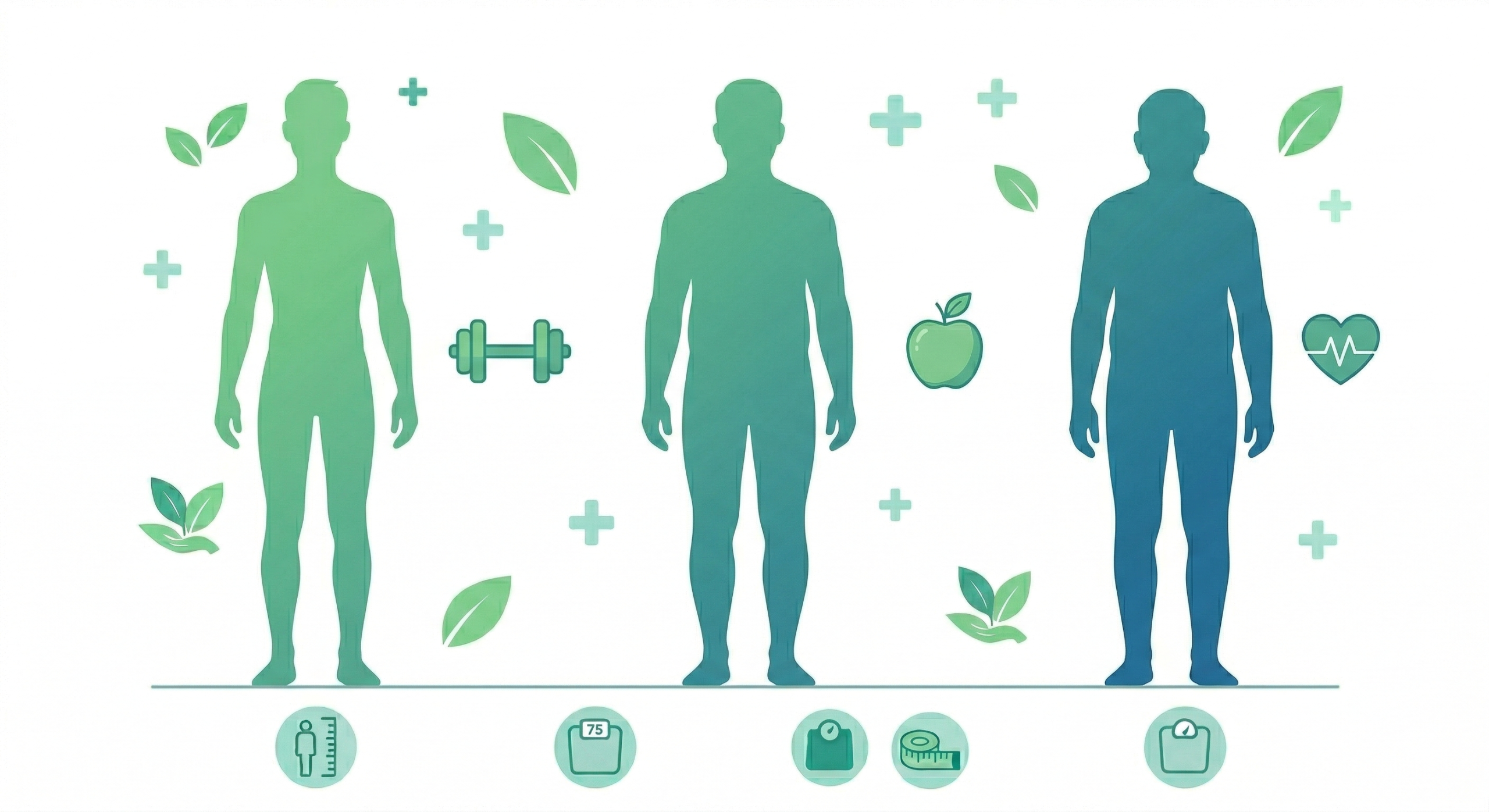
Your Body Changes With Age
When you were 20, your body was very different from what it is at 40. And at 60, it changes again. These are not just visible changes on the outside — your metabolism, muscle mass, bone density, and fat distribution all shift significantly as you get older.
This is exactly why age is one of the first things we ask when calculating your BMI. The same BMI number can mean very different things depending on how old you are.
How Age Affects Your Metabolism
Metabolism is basically how fast your body burns calories. In your teens and twenties, metabolism is naturally fast. You can eat more, stay active easily, and your body recovers quickly.
But after the age of 30, metabolism starts slowing down by roughly 1 to 2 percent every decade. This means your body burns fewer calories at rest as you age. If your eating habits stay the same but your activity level drops, weight gain becomes almost inevitable.
This is why so many people say things like “I eat the same as I always did but I keep gaining weight.” They’re not imagining it — it’s biology.
Muscle Mass and Age
Here’s something most people don’t think about. After the age of 30, the average person loses about 3 to 5 percent of their muscle mass per decade. This condition is called sarcopenia, and it’s more common than you think.
Why does this matter for BMI? Because muscle is denser and heavier than fat. As you lose muscle and replace it with fat over the years, your weight on the scale might stay the same — but your body composition is actually getting less healthy.
This is one of the limitations of BMI — it measures weight relative to height but doesn’t distinguish between muscle and fat. That’s why knowing your age helps give a more complete picture.
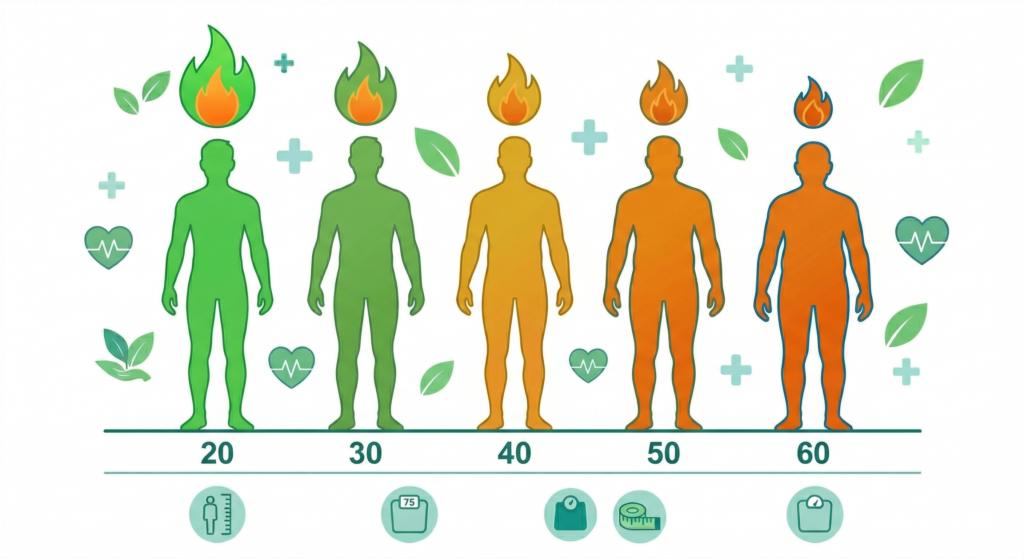
BMI Ranges by Age Group
While the standard BMI categories apply to most adults, here’s how health professionals generally interpret BMI across different age groups:
Ages 18 to 24 — Young adults typically have higher muscle mass and faster metabolism. A BMI at the higher end of normal is usually fine at this age.
Ages 25 to 34 — This is when metabolism starts slowing. Maintaining a BMI between 18.5 and 24.9 becomes more important as fat storage increases.
Ages 35 to 49 — Middle age brings hormonal changes, especially for women approaching menopause. Fat tends to shift toward the belly area, which increases health risks even at a “normal” BMI.
Ages 50 and above — Bone density decreases and muscle loss accelerates. Seniors with a slightly higher BMI sometimes have better health outcomes because having some extra weight provides protection against bone fractures and illness recovery.
Children and Teenagers Are Different
For anyone under 18, standard adult BMI categories don’t apply. Children and teenagers are still growing, so their healthy BMI range changes every year based on age and gender.
Doctors use special BMI-for-age growth charts for young people. If you’re checking BMI for a child or teenager, always consult a paediatrician rather than relying on adult BMI calculators alone.
What You Can Do at Any Age
The good news is that no matter how old you are, your body can still respond positively to healthy changes.
In your 20s and 30s — Build habits now. Regular exercise and a balanced diet in these years sets the foundation for a healthier middle age. Focus on building muscle through strength training.
In your 40s — Prioritise protein intake to slow muscle loss. Reduce refined carbs and sugar. Add activities like yoga or swimming that are easy on your joints.
In your 50s and beyond — Stay active in any way you enjoy. Walking, gardening, light weights — consistency matters more than intensity at this stage. Regular health checkups become essential.
Your Age, Your Baseline
Think of your age as your starting point — not a limitation. A 55-year-old who exercises regularly and eats well will have a much healthier body composition than a 25-year-old who lives a sedentary lifestyle, regardless of what the BMI number says.
Age is just one piece of the puzzle. Combined with your height, weight, gender, and lifestyle choices, it helps paint a much clearer picture of where your health really stands.
Use our BMI calculator to see exactly how your age factors into your personal health score — and take the first step toward understanding your body better today.